
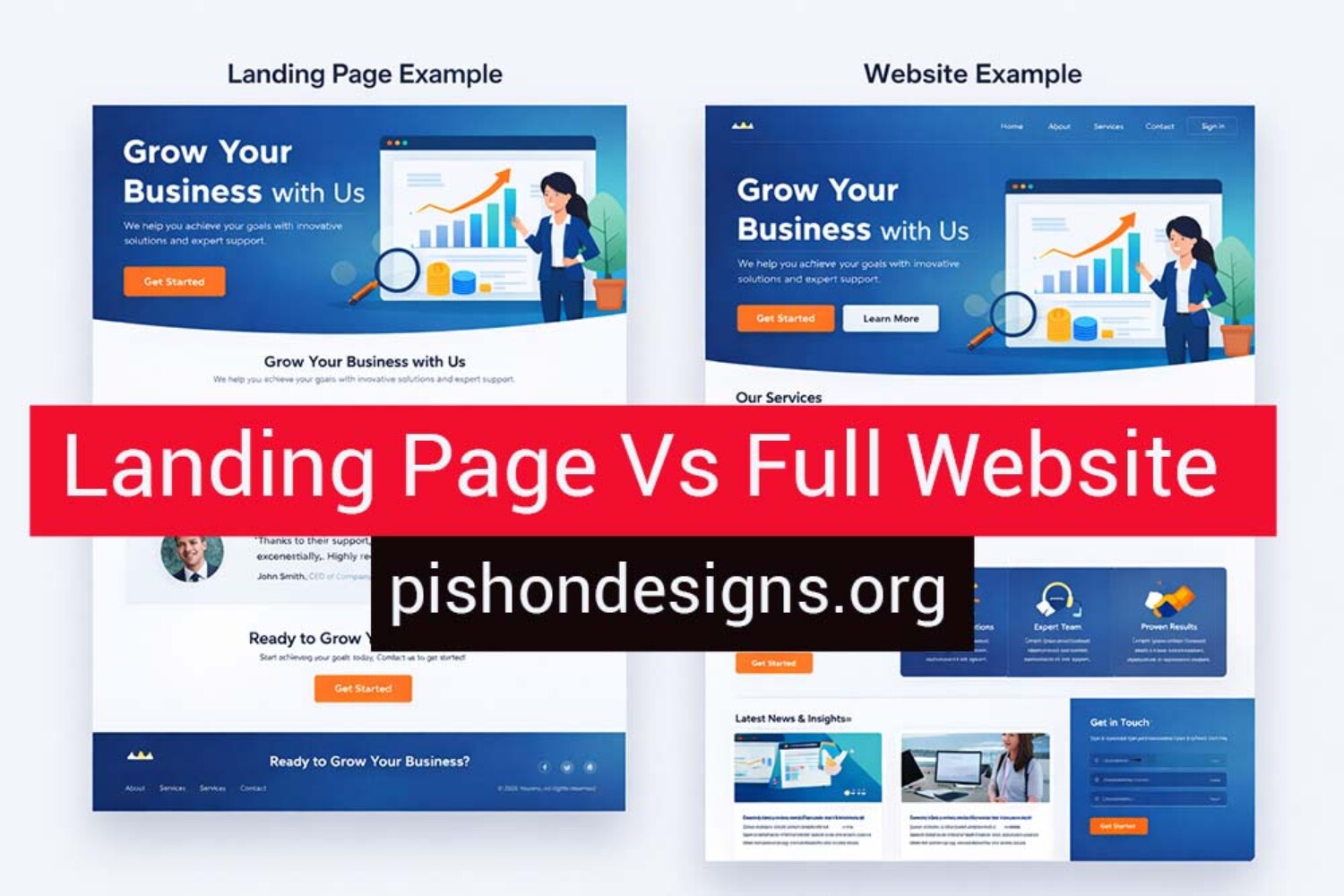
Landing Pages vs Full Websites? You thought they were the same? Nope. But how does that affect you as a business owner?
Let’s get you up to speed.
Landing Pages vs Full Websites: 5 Main Differences
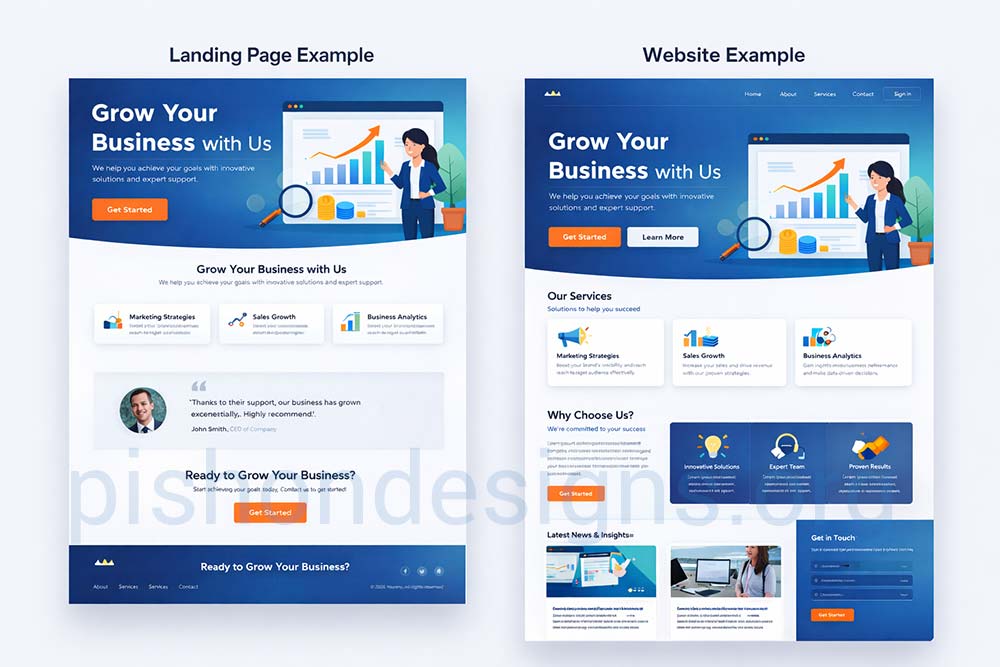
Landing pages vs full websites serve different roles in driving business online.
A landing page zeros in on turning one visitor into a quick action, such as grabbing an email signup or closing a product sale right there. A full website operates as the complete online base, laying out services, sharing background stories, running blog content, and handling contacts or bookings.
The key lies in matching the tool to the job—neither replaces the other, but both win when used smart.
1. Core Purpose: What is each for?
Landing pages lock onto a single objective from the start. The main aim is collecting leads from paid ads, pushing a discount code, or booking a consultation. The point is that every pixel pushes toward that one conversion. The messaging is focused on ONE GOAL, avoiding any info that doesn’t sell the goal. Distractions are removed and there’s no links to other offers.
Full websites juggle broader goals.
A full website will first educate the visitor on what the business does, showcase varied services or products, just like our main website does, host articles to draw search traffic, build credibility with reviews or testimonials, and capture inquiries across multiple channels all over the website.
Conversions happen at different stages: some read first, others buy direct. This setup nurtures long-term relationships and repeat visits.
Landing pages are single, focused pages designed for a specific marketing action or conversion (e.g., signing up, buying), while full websites are comprehensive, multi-page hubs designed for brand presence, navigation, and detailed information. – Google
2. Page Count and Structure
A landing page is one standalone page, period. Structure flow is linear: top hero banner with hook and button, middle proof sections like stats or quotes, bottom form or buy option. The Scrolling is short, loads hit under two seconds even on 3G. And what about Maintenance? It is VERY easy to swap copy or images in minutes.(That is if you designed it yourself sha).
Full websites multiply pages for organization—homepage services breakdowns, client portfolio grids, blog archives, about/team, pricing tiers, FAQ drops, and contact. And that is just for simple websites. Some websites can go as deep as 1000 pages and there’s even a portal, sign up, login, etc
3. No Navigation Menu.
Landing pages have NO navigation menu. No header menus, no sidebar widgets, no footer grids of links. Purposeful scarcity keeps focus glued to the CTA.
Full sites build navigation as backbone. Sticky top bars list main sections with hover dropdowns (e.g., Products > Category A/B), mega-menus for ecom, breadcrumbs for deep paths like Blog > SEO > Tools. Footer sitemaps aid crawlers and lost users.
For a landing page, having no navigation boosts landing rates 20-40% but have a website without it and you will confuse and lose visitors.
4. Conversion Focused
Landing pages zero in on one metric—like 15-30% lead signups from ads or straight sales with trust badges and lines like “Only 5 spots left.” They stack every trick: extra call-to-action buttons, form progress bars, thank-you pages after submit. Change setup based on where traffic comes from, like Facebook or email blasts.
Full websites have to work the whole funnel. Home page pushes “Learn More”, “Get Quote” etc. Conversion rates are at 1-4% average, but big traffic from search and social media more than makes up for it.
5. Lifespan and SEO Strategy
Landing pages work best short-term—for product launches, A/B tests, or holiday pushes—then we can pull them down or tweak for reuse. SEO targets one tight phrase like “cheap logo design St Louis,” teams with paid ads for fast traffic bumps.
Full websites can last years, with fresh posts in the blog and updated pages every few months. SEO coverage is wide: main service pages link to topic clusters, aim for top search spots, stack authority from backlinks. Organic visitors pile up over time, beating one-off promo spikes.
So Which is better for your business? A landing page Vs full website?
See, it depends on your goal. BUT Landing pages don’t work for service based businesses and small businesses. You NEED content. Extra Pages. Etc. That’s how you rank. Content is king.
As this user on reddit said,
“We have service pages for each service so they rank for those pages in searches. You want a contact page as well so when they search “contact business” that page ranks for it and they don’t have to go searching a landing page for the form.
If you have offer, ads, or specific services you want to advertise and run ads to, you create a landing page within the site for that specific campaign that’s targeted to those offers and services. You still have your full website around your company so people can learn more about you, what you do, validation that you’re legit.”
Another user said:
Your main site is where all your validation and seo stuff go. It should be like a business card or brochure, that validates who you are, includes media, reviews, contact info – all that stuff – and ranks your business for seo, included in all your directory listings etc.
Your landing pages should be for your offers and specific campaigns.
In Summary:
A landing page is primarily a standalone page designed for a single conversion goal, distinct from a website’s main navigation. While it often uses your domain (e.g., site.com/offer), it is purposely separated—lacking headers or menus—to prevent distractions and focus visitors on taking action, unlike general websites.
Standalone Function: Landing pages are designed for campaigns (e.g., ads, emails) with one goal: conversion.
Outside Navigation: They are usually not linked to the main navigation menu of your website, reducing “leaks” or distractions.
Inside Technology: Though they behave as standalone pages, they are frequently hosted inside your existing website platform (WordPress, etc.) or on a subdomain.
Websites: Are structured with multiple pages, menus, and internal links designed for exploration.
We offer website services too. 🙂
You get it???
Cheers.